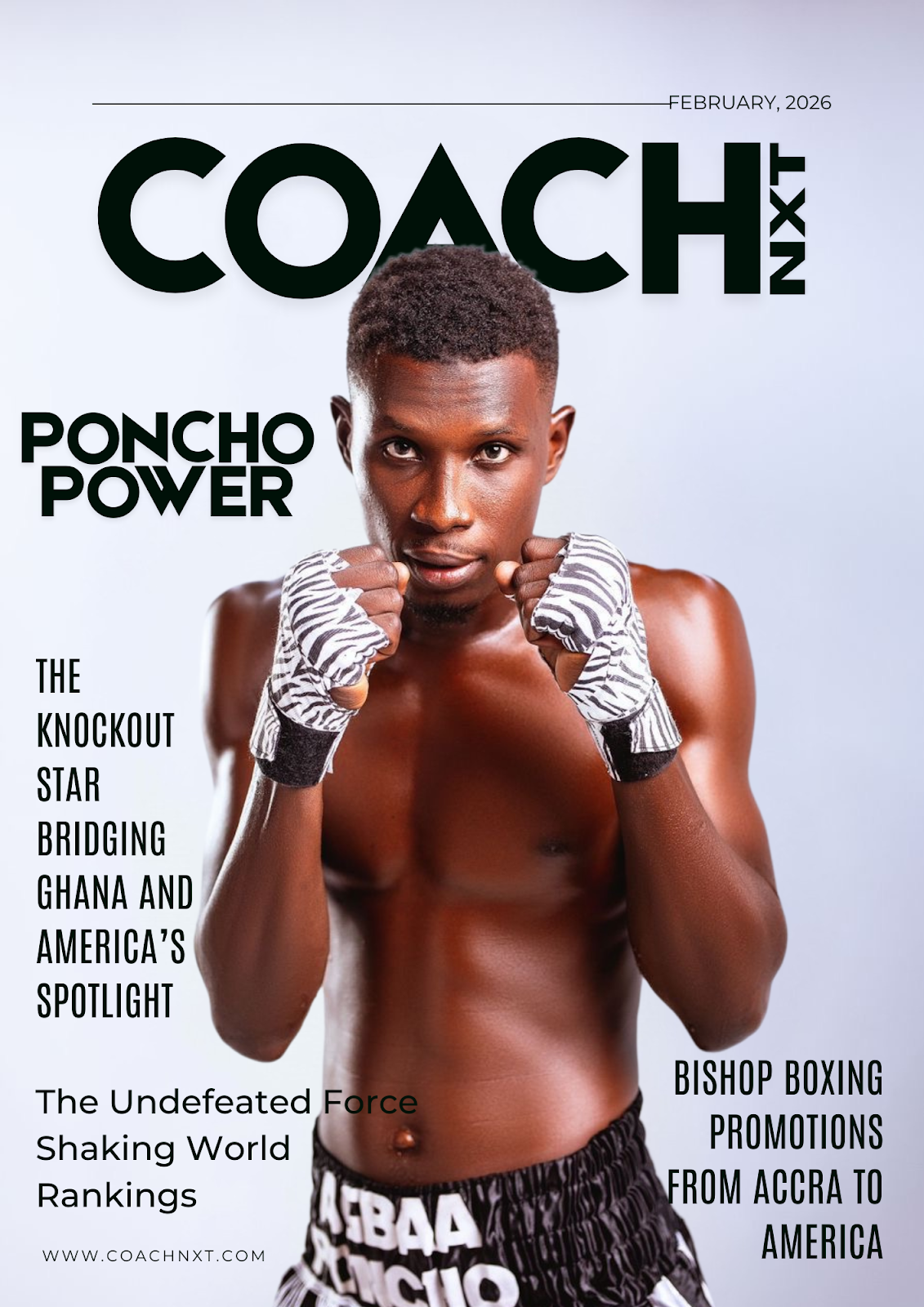

In the humid, electric nights of Accra’s Bukom district—where boxing gyms are carved out of corrugated metal and ambition hangs as thick as the coastal air—another contender is beginning to outgrow his surroundings. Faisal “Poncho Power” Abubakari is undefeated at 20–0, with 15 knockouts, and carries himself with the calm of a man who understands that his moment is no longer local. It is continental. Perhaps even global.
But this is more than the story of a rising fighter. It is the story of a blueprint—one that could reposition Africa not as boxing’s overlooked outpost, but as its newest launchpad. Behind Abubakari stands Bishop Boxing Promotions, a U.S.-born Ghanaian promotional outfit with a bold thesis: that Africa can become the strategic pit stop where world-class prospects refuel on credibility, sharpen their craft, and accelerate straight into world-title contention.
If it works, the sport’s geography may never look the same.
Bukom’s Son
To understand Poncho Power, you must understand Bukom.
The seaside enclave in Accra has produced champions before, from Azumah Nelson to Ike Quartey. It is a place where children learn to jab before they can drive and where boxing is not recreation but inheritance. Gyms spill into alleyways; heavy bags sway in the open air; trainers bark instructions over the soundtrack of traffic and waves.
Abubakari is a product of that ecosystem—hardened, disciplined, and offensively fearless. His style is built on blistering hand speed and suffocating punch volume. He does not stalk so much as swarm. Opponents who expect a measured technician instead encounter a fighter who throws in combinations, closes distance with urgency, and carries concussive power in both hands.
The numbers back the eye test. Fifteen knockouts in twenty wins is not just impressive; it is marketable. It tells promoters and networks what they need to know: this is a fighter who ends conversations early.
Yet for all his dominance on the regional circuit, there remained a missing piece. Rankings within the WBO junior welterweight landscape had placed him within striking distance of global relevance. He held continental recognition. He had momentum. What he did not have was access—the U.S. fight ecosystem, where televised undercards, strategic co-promotions, and mandatory timelines often determine who rises and who stalls.
Enter Bishop Boxing Promotions.
The Diaspora Bridge

In modern boxing, talent is only half the equation. Infrastructure is the rest.
Bishop Boxing Promotions operates with a dual identity—American in business literacy, Ghanaian in cultural fluency. That hybrid perspective may prove its greatest asset. The company understands how to navigate U.S. broadcast deals and sanctioning-body politics, while remaining rooted in the authenticity that defines Bukom’s fight culture.
The plan for Abubakari is clear and methodical.
First, visibility: high-profile U.S. undercards and streaming appearances designed to introduce him to a new audience. In an era where highlight reels travel faster than press releases, a single explosive performance can alter a career’s trajectory overnight.
Second, positioning: strategic matchmaking to accumulate WBO points while maintaining momentum. The objective is not reckless risk but calibrated escalation—regional names, then a marquee test, then an eliminator-level opportunity.
Third, credibility: co-promotion with established American outfits to ensure distribution, narrative framing, and entry into mandatory-challenge conversations.
Finally, community activation: mobilizing Ghanaian and African diaspora communities in key U.S. cities to transform cultural pride into ticket sales and broadcast traction. Boxing has always thrived on identity—Mexican Independence weekends, British stadium nights, Puerto Rican parades. Why not Ghanaian fight nights in New York or Atlanta?
This is not guesswork. It is a playbook.
Why Poncho Power Is the Perfect Flagship

Every business model needs a proof of concept. Abubakari is positioned to be that proof.
He carries the aesthetics of a breakout star: an unbeaten record, a high knockout ratio, and a backstory rooted in one of Africa’s most storied fight communities. His association with the Charles Quartey Boxing Foundation underscores his developmental pedigree, while his ranking foothold within the WBO system ensures he is not starting from zero.
Just as crucially, he passes the eye test.
In a sport often criticized for cautious matchmaking and low-output performances, Poncho Power fights with urgency. He throws to finish. He presses the action. He understands that entertainment value is currency.
Promoters crave fighters who can headline in the future. Networks crave fighters who can trend in the present. Abubakari has the potential to satisfy both.
The Stakes: Beyond One Fighter

Should Bishop’s model succeed, the implications extend far beyond a single world-title bid.
Imagine a cycle in which African champions accumulate continental belts, secure respectable world rankings, debut on U.S. undercards, win convincing tests, and transition into eliminators—all within a coordinated framework. Media rights would follow. Sponsorship dollars would expand. Training exchanges between Africa and the United States would become more common, raising professional standards on both sides.
For decades, African boxing talent has often required relocation to flourish. Fighters moved to Europe or America permanently to access opportunity. The new thesis suggests something different: that Africa can remain the developmental base while the United States becomes the strategic amplifier.
It is a subtle but powerful shift—from migration to collaboration.
If executed correctly, Accra could emerge not just as a sentimental origin story, but as a recognized waypoint on the global boxing map. A destination for scouts. A hub for camps. A proving ground.
The Road Ahead
The short-term objective is straightforward: a U.S. undercard debut that delivers fireworks. In today’s climate, a single viral knockout can fast-track months of negotiation.
Mid-term ambitions include a top-10 opponent or eliminator-level bout that forces sanctioning bodies to take notice. Rankings are leverage. Leverage is opportunity.
Long-term? A full-fledged world-title campaign.
That path is never linear. Injuries, politics, and shifting alliances complicate even the most carefully laid plans. But the ingredients are aligned: a 20–0 knockout artist, existing WBO positioning, and a promoter fluent in both markets.
Execution will determine whether theory becomes precedent.
Ghana’s Moment?
Ghana has produced world champions before, yet each generation feels like a rediscovery rather than a continuation. What Abubakari represents is the possibility of sustained presence—a pipeline rather than a one-off headline.
There is symbolism in that.
Bukom’s grit meeting American exposure. Diaspora pride merging with broadcast strategy. Local authenticity amplified by global machinery.
If Poncho Power claims a world title in the coming years, the belt will mean more than personal glory. It will validate a structure. It will signal to young fighters in Accra, Lagos, Nairobi, and beyond that global contention need not require abandoning home. It will demonstrate that Africa is not merely exporting fighters—it is exporting fully realized contenders.
Final Bell
Boxing has always been a sport of maps—routes from amateur circuits to professional arenas, from regional belts to global crowns. What Bishop Boxing Promotions proposes is a redraw.
In that redraw, Africa is not peripheral. It is central. It is the pit stop where contenders sharpen their edge, build narratives rooted in authenticity, and then accelerate onto the brightest stages in Las Vegas, New York, or Los Angeles.
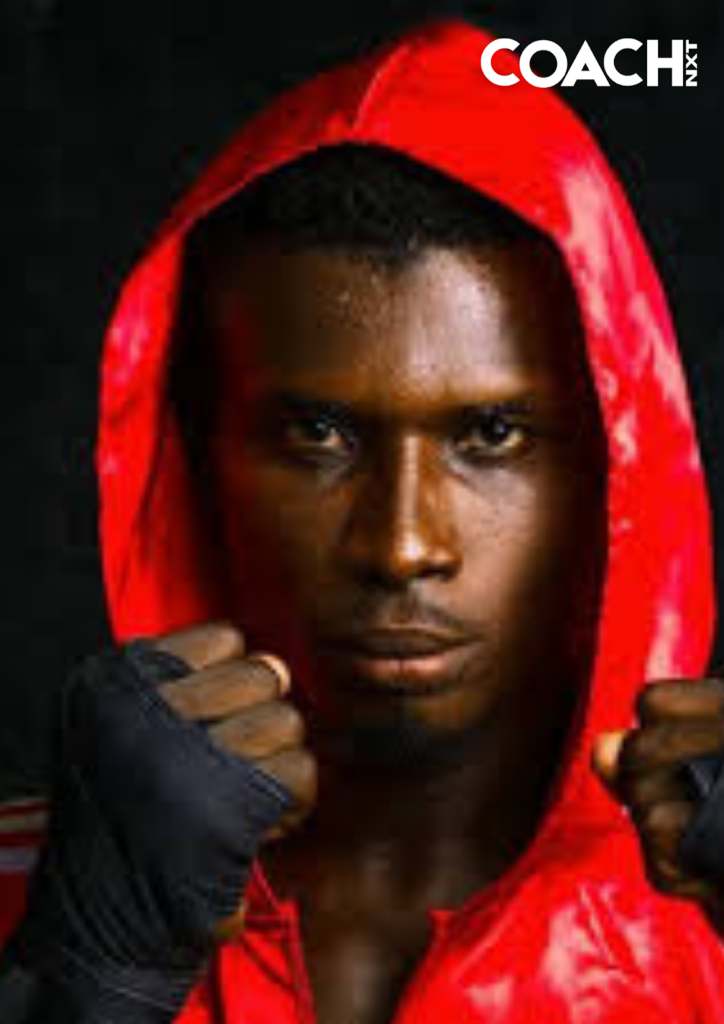
Faisal “Poncho Power” Abubakari stands at the front of that experiment—undefeated, explosive, and carrying the hopes of a district that has long punched above its weight.
Whether he becomes Ghana’s next world champion remains to be seen. But win or lose, his ascent marks a turning point in how boxing’s future might be built: not through relocation, but through connection.
And if the blueprint holds, the next landmark on the world boxing map will not be discovered. It will be rediscovered.
Accra.